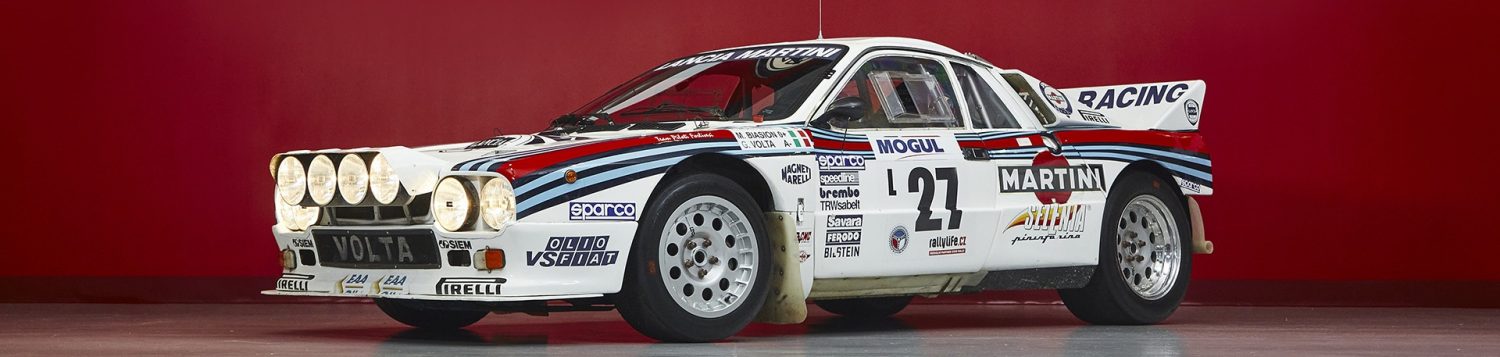

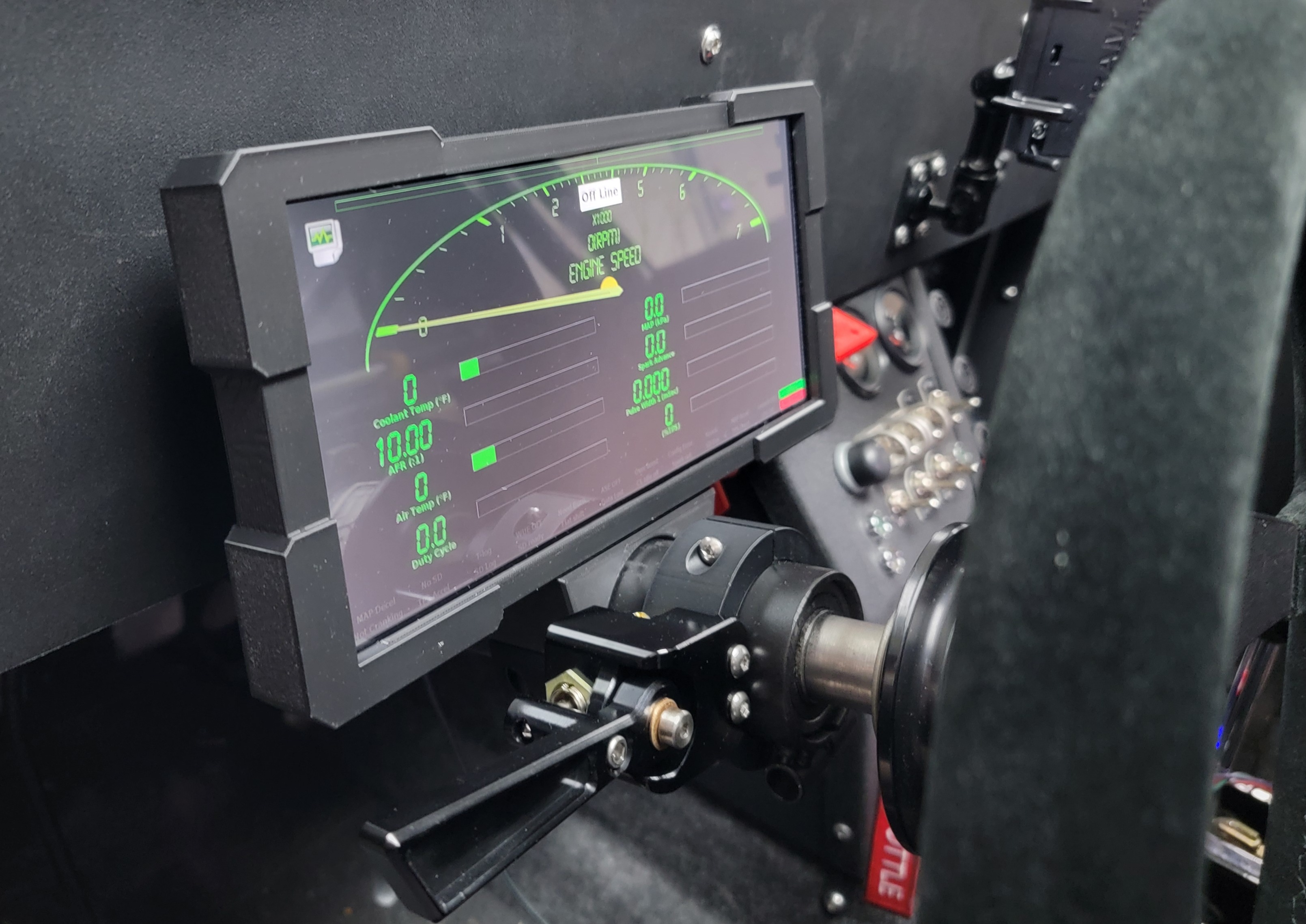
The mount for the display panel is complete. With a full Linux OS on the Raspberry PI, I can run TunerStudio which does a lot more than display engine data. The self-tuning feature will help dial in the fuel maps as I drive, diagnostic data will help with troubleshooting, and I can log engine operating parameters.
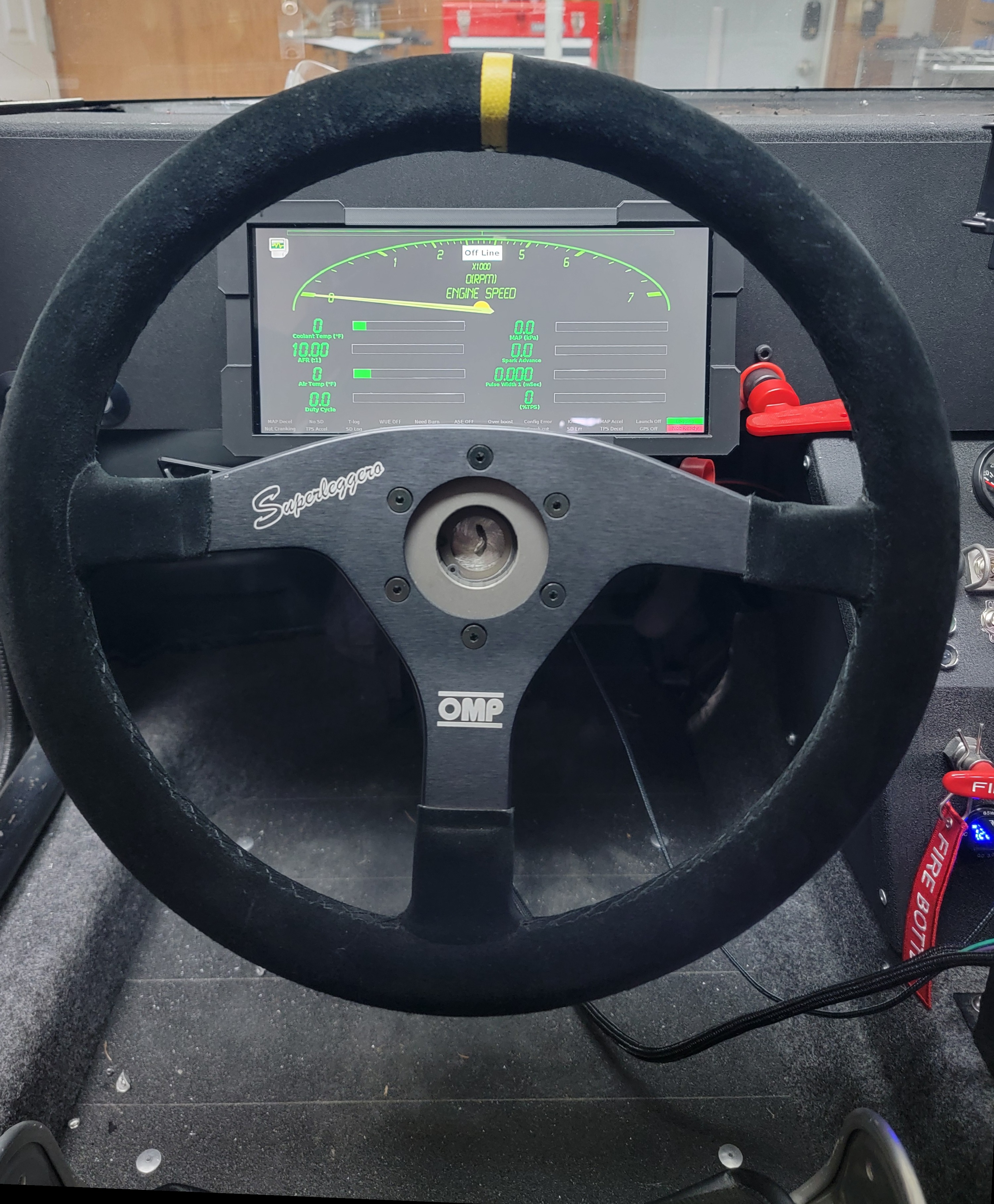
The low height of the new display provides more usable viewing area through the steering wheel. The interior is track-focused but there is no reason the metal dashboard can’t look nicer, so I’m going to work on that next.
 My Stradale
How does the raspberry pi connect to the various sensors? I had not heard of tunerstudio until your post. I always wanted to do something like this on the bus.
Some aftermarket digital dash’s require dedicated sensors. On my car the Raspberry Pi is hooked to the fuel injection ECU through a serial cable allowing it to display any data known by the ECU.
To display other data not needed for fuel/spark management, such as engine oil temperature, you need to run the output of that sensor into a generic analog input on the fuel injection ECU. Then you can display that data on the TunerStudio dashboard.
I’m using a Megasquirt ECU, specifically the MS3Pro.
Very cool. Megasquirt was the system that I had been looking into to tune/monitor my fuel injection on the bus. I found a blog of another bus that had used it with a laptop to help with their 2L FI bus engine. This was like 2010. That’s so cool that it has continued and evolved and now you can do what you’ve done with the pi and display.